

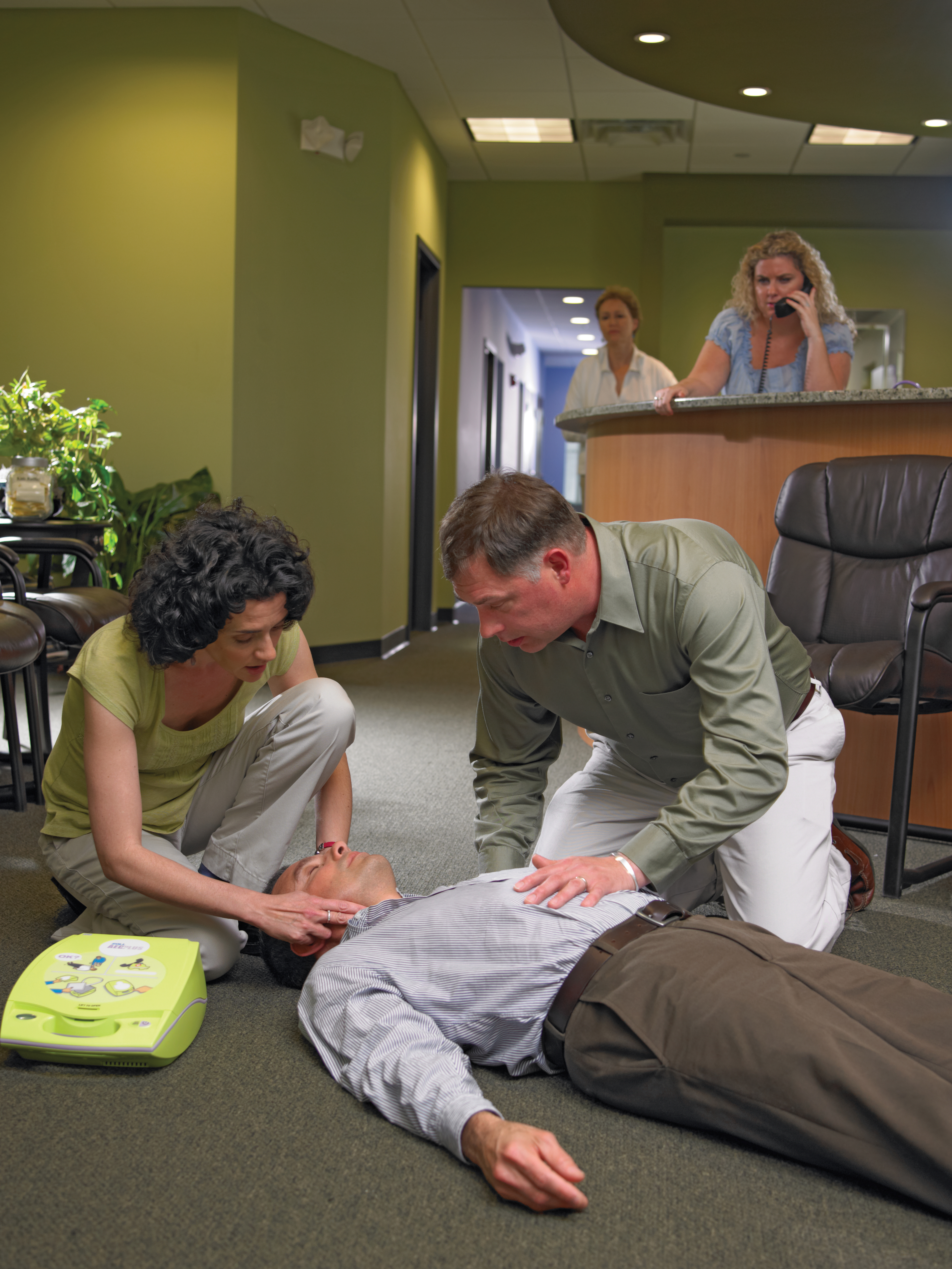
Sudden Cardiac Arrest (SCA) can strike at any time, without notice. There are times when the patient may present with signs and symptoms prior to a Sudden Cardiac Arrest. In particular, it may initially become evident the patient is suffering from a heart attack with some classic signs and symptoms – however, it must be remembered that some patients don’t show any warning signs before going into Sudden Cardiac Arrest.
Remember, Sudden Cardiac Arrest and a heart attack are two different medical emergencies. Always make sure you have help on the way. Dial ‘000‘ for urgent assistance in Australia, or see our guide to ambulance services across Australia.
If someone near you presents with any of the following warning signs, you should consider calling an ambulance for professional help:
Pain, tightness, heaviness, aching or pressure in the chest
Unexplained pain, heaviness or aching in the left shoulder or down one or both arms
Difficulty breathing or feeling unable to catch breath
Unexplained nausea and/or vomiting
Feeling lightheaded, dizzy or faint
Heart racing, fluttering or beating irregularly
Cold sweat or diaphoresis with no obvious cause
Sudden, unexplained exhaustion or weakness
Loss of consciousness or unresponsiveness
An unexplained feeling of ‘I just don’t feel well’
⚠️ Important: This list is a guide only and is not exhaustive. A cardiac patient may present with other signs and symptoms not listed here. If in doubt, always call 000 immediately.
Follow what you have learnt in your first aid courses. A patient presenting with any of the above signs and symptoms should be put at rest immediately and reassured that professional help is on the way. You must stay with the patient until paramedics arrive, and be prepared for them to go into Sudden Cardiac Arrest at any time. If you have access to a defibrillator (AED), get someone to retrieve the unit and have it on standby. Remember, you only apply an AED when the patient is unconscious and is not breathing.
The human body is very complex and can present with many different signs and symptoms during a cardiac event. If you have any concerns about someone you are with, call for expert medical assistance immediately.
Having an AED on hand can make the difference between life and death – with early defibrillation, survival rates from SCA can reach 74%. Browse our range of AEDs from trusted brands including ZOLL, Philips, HeartSine and LIFEPAK, and don’t forget to keep your device ready with current pads and batteries and regular maintenance checks. If you’re in South Australia, check the latest AED compliance requirements.
Do you have any questions? Call your Defibshop on 1300 729 575 or contact us here.
DRSABCD – Resuscitation Action Plan!
Defibshop – makes saving lives easy!
Australia’s No.1 Defibrillator Store!